

We are excited to add several new individual and team events to our World Cup 2026 schedule!
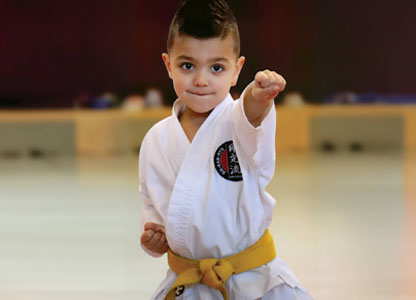
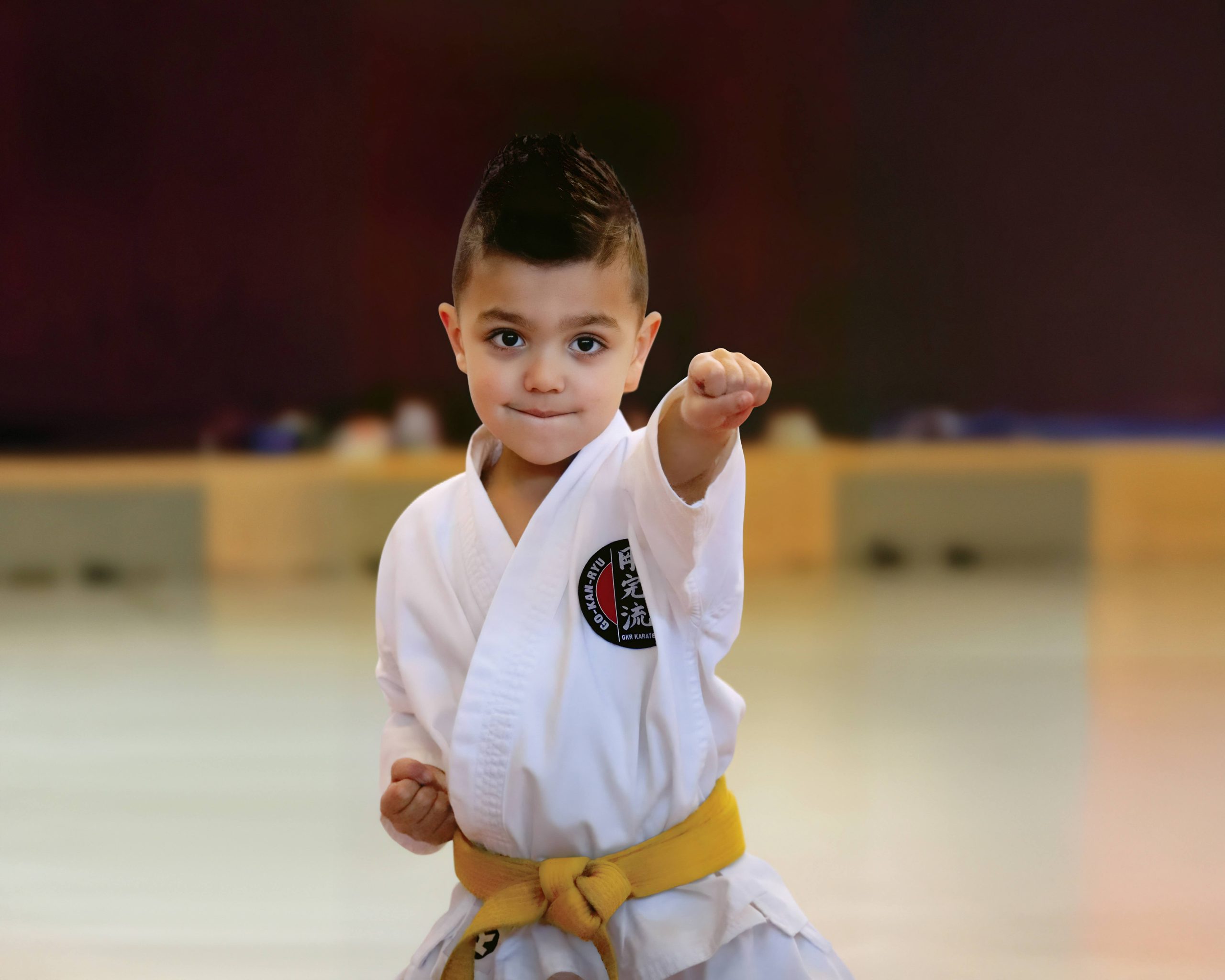
KIHON EVENT – For White and Yellow belts
In the past, our newest karate enthusiasts have had limited involvement in our tournaments as kata and kumite are typically introduced only after they have developed their foundational stances, blocks, and strikes. These new events provide White and Yellow belts with an opportunity to participate, allowing them to test their skills in a safe, supportive, and enjoyable environment.
Like the kata divisions, the ‘Kihon’ competition involves two students performing in the ring, while three Judges decide who wins and moves onto the next round.
While White and Yellow belts do not generally study kata; they can instead perform the kihon combinations they are learning in class in preparation for their yellow or orange belt grading. Regardless of rank, all competitors may choose to perform either the white belt or yellow belt kihon combinations. Judges will not automatically favour a competitor based solely on which of the two combinations they select.
The kihon drills for both white belt and yellow belt have competitors performing three different combinations, each one moving 4 steps up the ring and then 4 steps back down the ring. Yellow belt kihon also has a technique where they turn (known as a Mawate in Japanese).
Competitors may do the same kihon drill in each bout, or they may change between the white belt and yellow belt kihon from bout-to-bout, however, they may not interchange within a bout. Whatever grade drill they begin, they must see this through to the completion.
Click here to view a demonstration of the Kihon combinations for White and Yellow Belts and start practising today; you could become a World Champion.
KICK-SHIELD SUMO (BAG PUSHING) – For White and Yellow belts
Kumite competition involves two students sparring for points within a ring, with the winner of each bout progressing to the next round.
White belts do not practise kumite, as they are still developing their technical foundations and confidence. While Yellow belts are permitted to spar, many may not yet feel ready to compete in a tournament setting. However, Yellow belts wishing to compete in kumite (sparring) do have the option to enter the ‘Up to 6th Kyu Kumite’ division, which includes competitors from Yellow to Green belt.
To provide an alternative pathway, we are introducing an event called ‘Kick-Shield Sumo’, which provides an exciting and accessible event for white belts and also for yellow belts who may not yet feel confident entering kumite. This event offers a safe and engaging way to test their skills in a controlled combat environment.
The objective of Kick-Shield Sumo is to manoeuvre your opponent out of the ring using a kick-shield. A point is awarded when an opponent steps out of the ring or when any part of their body, other than the feet, touches the ground during the bout.
Although no punches are thrown, the event remains highly competitive and develops essential self-defence skills, including:
- Stance strength for resistance – Strong foundational stances help competitors withstand pressure when being pushed.
- Stability and balance – Proper stance work allows competitors to remain centred and balanced, even when their opponent suddenly shifts or evades.
- Movement and direction – Effective footwork and stance transitions enable competitors to redirect force and move efficiently, much like yielding in traditional martial arts.
- Fighting spirit – Determination, resilience, and mental strength are key elements of self-defence and are thoroughly tested in this event.
- Adaptability – Like real-world self-defence situations, Kick-Shield Sumo is dynamic and unpredictable, requiring quick thinking and the ability to adjust strategies on the fly. Think of this event as a form of physical chess, where competitors must constantly think, react, and adapt to outmanoeuvre their opponent.
Click here to view a demonstration of Tournament Kick-Shield Sumo.
CADET TEAM EVENTS – For students 7-13yrs, Green belt and above
Both Juniors (14-17yrs) and Seniors (18yrs plus) have had the privilege of representing their country in Team kata and Team Kumite events in previous World Cups
Due to popular demand, GKR is now introducing two separate Cadet team divisions: for students aged 7-10yrs and 11-13yrs. Cadet Team kata and Cadet Team Kumite will each comprise of 3 team members. Note: For Cadets 7-10yrs, the same three members can compete in both Team kata and team kumite.
Cadet Team divisions are:
Cadet Team Kata: 7-10yrs, Green belt and above (Male & Female)
Cadet Team Kumite: 7-10yrs, Green belt and above (Male & Female)
Cadet Team Kata: 11-13yrs, Green belt and above (Male & Female)
Cadet Team Kumite: 11-13yrs, Green belt and above (Male)
Cadet Team Kumite: 11-13yrs, Green belt and above (Female)
Whilst Teams for 14-17yrs and 18yrs+ are selection only, Cadet team events are open to any students who wish to enter. These events will run, and World Titles medals awarded on the Friday evening the 24th of July.
EXHIBITION EVENT: CONTINUOUS KUMITE – For Junior and Senior Opens
Our final new event for WC26 is Continuous Kumite. While it is only an exhibition event, it still means 4 people will be crowned as GKR’s inaugural World Continuous Kumite Champions. The four divisions are:
(14-17yrs) Junior Opens Male
(14-17yrs) Junior Opens Female
(18yrs+) Senior Opens Male
(18yrs+) Senior Opens Female
This is considered an exhibition event and limited numbers of representatives per country may enter (selection process only).
Unlike the stop-start nature of point fighting, Continuous kumite sees the bout run for 90 seconds without stoppage, with Judges carefully observing to decide a winner. Like in a boxing contest, the winner of the bout/round will receive 10 points and the other side will receive 9. If the referees feel that the winner’s performance was ‘significantly superior’ then it may be scored a 10-8 round.
This division also allows for many new techniques such as kicking to the thighs, circular hand strikes and even takedowns. And as the bouts run continuously, fatigue also plays a major factor, and no doubt competitors will rely on the roar of the crowd, cheering on their countrymen and women to push through to the final bell.
I am very excited to witness these events, and I know they are already being trialled in regional tournaments around the World, with amazing feedback thus far. Speak with your instructor at class if you have any questions about these new events or entering the World Cup.
Regards
Anthony Ryan
International Director of Coaching